
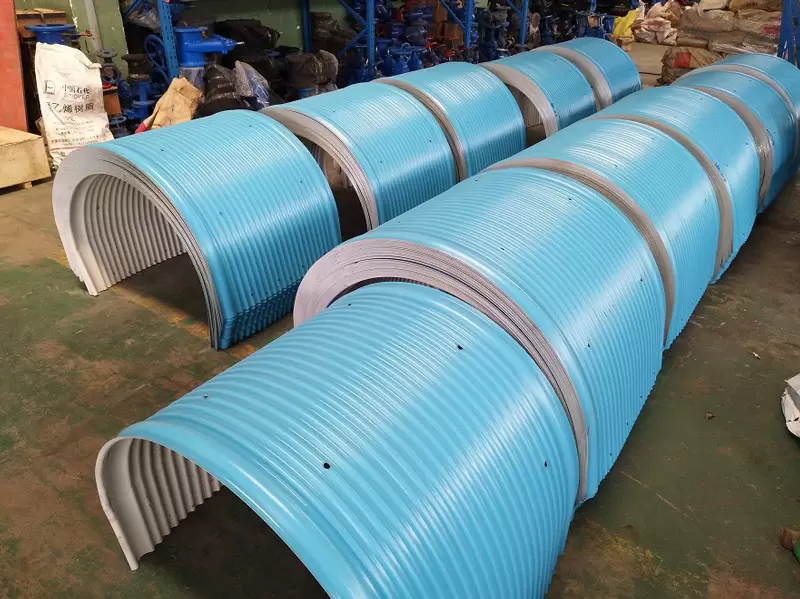
Color Steel Rain Covers:
These covers are manufactured by rolling color-coated steel sheets into a corrugated profile (forming “color steel tiles”), which are then curved into an arched shape. Installed over belt conveyor systems, they serve to protect the conveyor equipment itself—thereby extending its service life, reducing maintenance costs, and enhancing economic efficiency. Furthermore, they prevent the dispersion of dust during material transport, thereby mitigating environmental pollution. For color steel rain covers, choose Shanghai Tangyi—a manufacturer with 15 years of experience and robust technical capabilities.
These covers are formed by pressing color-coated steel sheets. The coating material typically consists of cold-rolled or galvanized steel substrates that undergo chemical surface treatment, followed by the application of a coating (via roller coating) or the lamination of a composite film (such as PVC). The material is then cured through baking to produce the final product. This product is also commonly referred to as “pre-painted color steel sheet” or “plastic-coated color steel sheet.”
The Functions of Color Steel Rain Covers:
Color steel rain covers serve a dual purpose, benefiting both the transported cargo and the surrounding environment. During the conveying process, they help minimize cargo loss and wastage. Additionally, by shielding the conveyor belt from external elements, they significantly extend the operational lifespan of the conveyor system itself.
Color Steel Rain Covers | Conveyor Rain Covers | Protective Covers | Fixed-Type Rain Covers | Rain Cover Manufacturer: Choose Shanghai Tangyi—specializing in rain cover solutions with 15 years of dedicated experience.
Installation Steps for Color Steel Rain Covers:
- Preparation of Tools and Materials: Ensure that the appropriate rain covers and the necessary fastening materials (for securing the covers) are ready.
- Safety Precautions: Implement all necessary safety measures and securely fasten your safety harness in preparation for the installation work.
- Positioning and Adjustment: Carefully place the selected rain cover over the designated component (e.g., a relay unit). Adjust the position of the cover to ensure it completely encloses the component. Inspect the assembly for any potential entry points where water could seep in. Once the positioning is finalized and it has been verified that there are no gaps allowing water ingress, use binding straps or other sturdy ropes to firmly secure the cover in place; this prevents the cover from becoming dislodged or failing to perform its protective function.
- Working at Heights: Since the installation of rain covers often requires climbing onto structures (such as transformers), it is imperative to keep your safety harness securely fastened throughout the installation process to prevent falls from heights.
- Final Verification: Upon completion of the installation, conduct a thorough inspection to confirm that the rain cover is securely and firmly attached.
- Site Cleanup: Tidy up the work area, gather all tools, and safely vacate the work site.


